BLOG


The benefits of manual lymphatic drainage

manual lymphatic drainage

Background on manual lymphatic drainage

Manual lymphatic drainage (MLD) is a form of bodywork done by a licensed therapist. It is a gentle technique that increases lymph flow, helps move stagnant lymph, reduces swelling (also known as edema), soothes pain and discomfort, and supports the immune system. Lymph a clear to pale-yellow fluid that is part of the body’s immune system. It circulates through a network of vessels, and its job is to collect bacteria, waste, and cellular debris from tissues. Lymphatic organs include the spleen, thymus, and tonsils. Lymph nodes filter the lymph and return it back to the bloodstream. While the heart pumps blood through the body, lymph relies on the body’s movement to circulate lymph through the vessels. Manual lymphatic drainage is a great way to help lymph circulate through the body.


How manual lymphatic drainage differs from traditional massage therapy

While manual lymphatic drainage and traditional massage both use hands-on therapeutic techniques to promote health and well-being, MLD has some unique traits. MLD uses very light pressure and rhythmic stretching of the skin move lymph toward lymph nodes and stimulate a process called anastomosis. Anastomosis is the formation of new connections between the skin and adjacent vessels. The lymph is directed toward areas of the body with working lymph nodes that process and filter the lymph. Unlike traditional massage, MLD does not use lubricants. This is because lotions and oils create a slick surface that would inhibit the ability to gently stretch the skin and underlying tissues that is required to stimulate the lymphatic vessels just below the surface of the skin.


Conditions addressed

Manual lymphatic drainage can help with a wide variety of conditions involving the lymph. MLD promotes detoxification, relaxation, cellular-level immunity, and enhances the beauty of the skin. You can also benefit from MLD if you have any of the following conditions:

  • Lymphedema
  • Phlebo-lymphostatic edema (combined lymphedema and venous insufficiency)
  • Post-surgical edema
  • Post traumatic edema
  • Lipo-lymphedema
  • Lipedema
  • Complex regional pain syndrome (CRPS or RSD)
  • Rheumatoid arthritis
  • Scleroderma
  • Cyclic idiopathic edema
  • Venous insufficiency
  • Fistulas
  • Burns
  • Recovery from cosmetic surgery
  • Rosacea
  • Acne
  • Sinusitis
  • Chronic fatigue
  • Chronic pain
  • Fibromyalgia
  • Lyme’s disease
  • Constipation


Contraindications

Manual lymphatic drainage should not be performed when any of the following conditions are present:

  • Untreated congestive heart failure (CHF / cardiac edema)
  • Acute infection (like cellulitis or erysipelas)
  • Renal failure
  • Acute deep vein thrombosis (DVT)
  • Malignant lymphedema


Please note that MLD should also not be performed directly on the abdomen during pregnancy or when acute conditions like diverticulitis, IBS, or Crohn’s disease are present. It should not be performed directly on the neck in cases of thyroid conditions, a hypersensitive carotid sinus, or with cardiac arrhythmia.  In these cases, your therapist can perform MLD on other parts of the body.


What to expect

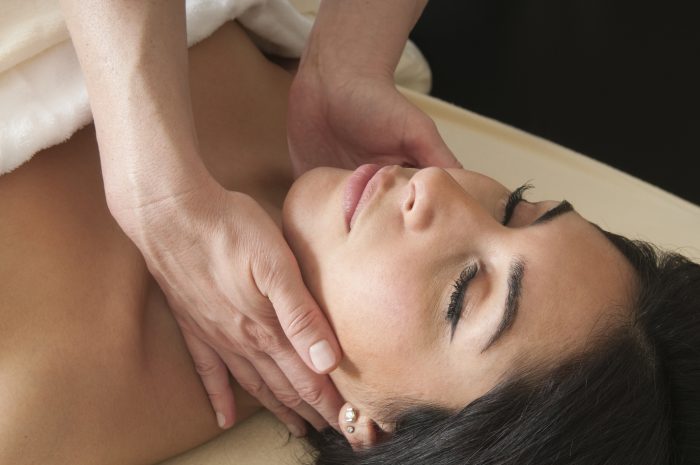
During a treatment, you relax under a sheet and blanket on a massage table. Your therapist’s warm hands will gently and rhythmically stretch the skin. The treatment is wonderfully relaxing. It’s not uncommon to feel increased thirst or experience increased urination afterward as your lymphatic system becomes more active and balanced. Overall, you can expect to feel lighter and more relaxed after a session!


Treatment series

Manual lymphatic drainage is best done in a series of treatments. We recommend scheduling one initial session and then a series of shorter weekly follow-up sessions to help establish a healthy lymphatic flow and achieve a faster pace of healing. Your therapist will recommend a treatment plan customized specifically for you. If needed, you can space our your sessions.


Ready to start your healing with MLD?  Click here to book online.


Finally, not sure what type of treatment would be best for you?  For example, is manual lymphatic drainage, therapeutic massage, or acupuncture a better fit? Please click this link to schedule a free 10-minute call with our senior scheduling receptionist who will be happy to answer any questions you have and advise you on the best services and practitioner to meet your unique needs.


Any further questions? Please reach out and email us through our website or call or text 910-622-4269.


About the Author

Ericca Burke is the owner of HAVEN Acupuncture & Chinese Medicine where she provides acupuncture and Chinese medicine treatments in Wilmington, NC. Click this link to read more about Ericca. 
 

About HAVEN Acupuncture & Chinese Medicine in Wilmington, NC

HAVEN Acupuncture & Chinese Medicine is an acupuncture and Chinese medicine practice located in Wilmington, NC just minutes from beautiful Wrightsville Beach. Click this link for contact information and directions. Click this link for a listing and description of services offered.

How to have a great morning

great morning

How to have a great morning

Your alarm clock goes off, and you’re exhausted. You reach for the snooze button and pull the covers over your head. The dark mornings in the fall and winter make it even harder to wake up. And yet, it is possible to have a great morning. Consistency is the key. Here’s how:


Wake up at the same time every morning, even on weekends

Our bodies feel best when they run on a consistent rhythm. Waking up at the same time each morning supports our circadian rhythm, which is the body’s 24-hour cycle that regulates sleep and wake patterns. When we wake at different hours, especially on weekends, it’s like traveling to a different time zone and feeling jet lagged. Waking up at the same time also provides your body with a consistent and reliable cortisol boost giving you the energy you need to get up and get going in the morning.  Additionally, the research study in the Journal of Public Health Greater bed- and wake-time variability is associated with less healthy lifestyle behaviors: a cross-sectional study found that consistent in sleep timing is associated with a healthier lifestyle.


Don’t hit the snooze button

When we hit the snooze button, it starts a new sleep cycle. When the alarm goes off again after a few minutes, the body starts the waking process all over again. Snoozing also perpetuates sleep inertia. Sleep inertia refers to morning grogginess, the temporary feeling of disorientation after waking up. A study in the Journal of Physiological Anthropology called Effects of using a snooze alarm on sleep inertia after morning awakening shares that using a snooze button prolongs sleep inertia compared to a single alarm, making it harder to wake up. Remove the temptation of hitting the snooze button by placing your alarm clock out of reach. If you must use your cell phone as your alarm, place it as far away from your bed as possible.


Expose your eyes to light as soon as possible upon waking

In Chinese Medicine, the point Bladder 1, located at the inner canthus of the eye (where the upper and lower eyelids meet), is significant in the sleep-wake cycle. Light hitting this point stimulates the body to wake up and sends the message to the body that it is morning. Exposure to daylight also tells the body to stop producing melatonin and increase the production of cortisol. Cortisol is important because it provides the energy needed to go about your day. What to do when it’s dark out? Consider getting a sunrise alarm clock that has a light, open your shades if it’s light out, or turn on the lights as soon as possible after opening your eyes.


Have a ritual or something to look forward to

Have a cup of coffee or tea, stretch, meditate, or gently move your body. Even if it’s just for five minutes. Go for a walk or get outside, even for a moment, to expose your body to daylight. What we do in the morning sets the tone for our day. Consider going phone-free for the first 30 minutes after waking. Looking at the news or scrolling can cause stress and anxiety. Choose a more grounding and positive activity instead. Many people like to spend a few minutes thinking about what they’re grateful for. This is also a great time to set your intention for the day.


Eat!

In Chinese medicine, we follow the Chinese organ body clock. This refers to the projection of organ system function to our 24-hour clock. Every two hours a different organ system is either at its peak function of activity or its lowest activity or time of rest, just like the tides in the ocean. According to the Chinese organ body clock, the best time to wake up is between 5:00 a.m. – 7:00 a.m., and the best time to eat is between 7:00 a.m. – 9:00 a.m. Ideally, this is the time to have the biggest meal of the day. It is when the stomach energy is at its peak and can most easily digest food.


Additionally, numerous studies have shown the benefits to eating breakfast, and that it’s the most important meal of the day. An article from the Cleveland Clinic called Is Breakfast important?  shares that breakfast is the most important meal of the day, with many benefits, including improved heart health, lower diabetes risk, and reduced brain fog. If you like intermittent fasting, you might consider adjusting your fasting period to finish earlier the day before so you can eat breakfast by 9:00 a.m.


Want to talk about how acupuncture and Chinese medicine can help you have a great morning? We’d love to hear from you. Please click this link to schedule a free 10-minute call with our senior scheduling receptionist who will be happy to answer any questions you have and advise you on the best services and practitioner to meet your unique needs.


Any further questions? Please reach out and email us through our website or call or text 910-622-4269.


About the Author

Ericca Burke is the owner of HAVEN Acupuncture & Chinese Medicine where she provides acupuncture and Chinese medicine treatments in Wilmington, NC. Click this link to read more about Ericca. 
 

About HAVEN Acupuncture & Chinese Medicine in Wilmington, NC

HAVEN Acupuncture & Chinese Medicine is an acupuncture and Chinese medicine practice located in Wilmington, NC just minutes from beautiful Wrightsville Beach. Click this link for contact information and directionsClick this link for a listing and description of services offered.

Embrace the wisdom of the metal element this fall

Embrace the wisdom of the metal element this fall

In Chinese medicine, fall belongs to the metal element. Fall is a beautiful time of year, and a great time to release what no longer serves you. The weather shifts, giving a break from the summer heat. Cool breezes gently loosen leaves from the trees. The leaves start to change color, in beautiful shades of gold, orange, and red. Then, the leaves start to fall.


This is the time of year when many people start feeling a little sad, or even a little stuck or unfocused. This can result in depressed feelings or digestive issues, for example. In Chinese medicine, our organs are associated with phases or elements. In the fall, the metal element is dominant, and the associated organs are the lungs and the large intestine. Feelings of sadness and needing to let go are right in line with the energetic shift of the changing seasons.


Alignment with the seasons and phases

People are often fascinated to hear about how their organs are associated with the different seasons and how this relates to symptoms they experience in their bodies.


In Chinese Medicine, there are five phases of transformation: wood, fire, earth, metal and water. While in Traditional Chinese Medicine these are called elements, Classical Chinese Medicine refers to them as phases because they develop and change into one another. The five phases or elements correspond to the seasons spring, summer, fall, and winter. Chinese medicine further divides summer into two parts: summer and late summer. Late summer refers to the transformation between the warmer summer weather and cool fall weather. The seasons and phases (or elements) are associated as follows:


  • Spring: Wood. This is when nature starts stirring from winter’s dormancy. Trees and plants blossom. New branches grow out of old wood, and new growth begins.


  • Summer: Fire. This is the time of warmth and activity. Nature is moving actively, and as a result is growing and flourishing.


  • Late summer: Earth. This is the time of harvest. It is also is the pause between the rising of the warming and active phases of wood and fire and the declining and cooler phases of fall and winter.


  • Fall: Metal. This is when nature lets go of what is not needed. Leaves fall from the trees. The compost from dead leaves enriches the soil so it can prepare for the next cycle of growth in the spring.


  • Winter: Water. This is a time of rest. Animals hibernate, the days are shorter, and nature gets still and goes within to build up reserves.


How the fall season influences the lungs and large intestine

As I shared earlier, the lungs and large intestines represent the metal element and fall. Just as the trees let go of their leaves in the fall, this is the perfect time to let go of what we no longer need. When we hold on to grief rather than letting it move through us, we can feel depressed and sad. When our large intestine does not let go of waste the body does not need, we can feel bloated and uncomfortable. Additionally, we can feel foggy and unfocused when our lung and large intestine energy are weak. The metal energy is not strong enough to cut through to reveal what’s really important.


In Chinese Medicine, the skin belongs to the metal element. This is a time of year where people frequently experience dry, itchy, skin. There can also be an increase in acne and rashes, among other skin conditions. A dry, itchy condition can indicate an energetic deficiency. On the other hand, a hot and red condition can indicate excessive energy.


Help your lungs and large intestine release what no longer serves you

Every individual is unique, and no two people will experience the same symptoms for exactly the same reason. When I see a new patient, I make the time to ask a lot of questions and review their health history. This allows me to determine what is going on with their energy. For example, it is important to determine whether their energy is getting stuck or is deficient. I develop a customized treatment to address their specific needs and restore the balance of energy. This might involve acupuncture needles, ear seeds, qigong exercises, and diet and lifestyle advice.


Want to talk about how acupuncture and Chinese medicine can help you? We’d love to hear from you. Please click this link to schedule a free 10-minute call with our senior scheduling receptionist who will be happy to answer any questions you have and advise you on the best services and practitioner to meet your unique needs.


Any further questions? Please reach out and email us through our website or call or text 910-622-4269.


About the Author

Ericca Burke is the owner of HAVEN Acupuncture & Chinese Medicine where she provides acupuncture and Chinese medicine treatments in Wilmington, NC. Click this link to read more about Ericca. 

 

About HAVEN Acupuncture & Chinese Medicine in Wilmington, NC

HAVEN Acupuncture & Chinese Medicine is an acupuncture and Chinese medicine practice located in Wilmington, NC just minutes from beautiful Wrightsville Beach. Click this link for contact information and directionsClick this link for a listing and description of services offered.

Welcome to late summer!

late summer

Late summer – the fifth season

Chinese medicine recognizes five seasons: spring, summer, late summer, fall, and winter. Late summer is important because it is the shift between the warm seasons to the cool seasons. It is the time when the hot yang energy of the summer starts to shift into the cool yin energy of autumn.


Chinese medicine associates our organs with phases or elements. In late summer, the earth phase is dominant. The organs associated with earth are the stomach and spleen. The earth element is all about transformation. It signifies the turning point between the peak of summer and the gradual change into fall. The earth element demonstrates an inflection point, just like the space between an inhalation and exhalation.


Alignment with the seasons and phases

People are often fascinated to hear about how their organs are associated with the different seasons and how this relates to symptoms they experience in their bodies. In Chinese Medicine, there are five phases of transformation: wood, fire, earth, metal and water. While in Traditional Chinese Medicine these are called elements, Classical Chinese Medicine refers to them as phases because they develop and change into one another. The seasons and phases (or elements) associate as follows:


  • Spring: Wood. This is when nature starts stirring from winter’s dormancy. Trees and plants blossom. New branches grow out of old wood, and new growth begins.


  • Summer: Fire. This is the time of warmth and activity. Nature is moving actively, and as a result is growing and flourishing.


  • Late summer: Earth. This is the time of harvest. It is also is the pause between the rising of the warming and active phases of wood and fire and the declining and cooler phases of fall and winter.


  • Fall: Metal. This is when nature lets go of what it no longer needs. Leaves fall from trees. Compost from the dead leaves enriches the soil so it can prepare for the next cycle of growth in the spring.


  • Winter: Water. This is a time of rest. Animals hibernate, the days are shorter, and nature gets still and goes within to build up reserves.


How the late summer season influences the organs

As I shared earlier, the spleen and stomach are the organs associated with the earth element and late summer. This is a good time of year to focus on digestive health, centering, and stability. Ancient classical Chinese texts share that spleen and stomach energy are the foundation of health. The stomach takes in nutrition and works with the spleen to transform the nutrition into qi (energy) and blood. Spleen energy then transports the qi and blood to various organs.


Spleen energy is also responsible for holding and ascending energy. It holds the blood in the vessels. It helps keep organs like the bladder and uterus lifted. Weak spleen energy can result in prolapse of these organs, or varicose veins, for example. Stomach energy, on the other hand, is a descending energy. This energy helps food descend into the body to be transformed and utilized. When stomach energy is weak, the energy is said to rebel and go upward, which can result in indigestion, burping, etc.


Additionally, earth energy is responsible for the digestion of thoughts and emotions. Energy stagnates when we don’t express ourselves. As a result, we can feel mentally stuck. We may have a repetitive thought that we can’t get out of our head. We might even feel physically stuck with issues like constipation and bloating.


Help easing into the transition of late summer

Every individual is unique, and no two people will experience the same symptoms for exactly the same reason. When I see a new patient, I make the time to ask a lot of questions and review their health history. This allows me to determine what is going on with their energy. For example, it is important to determine whether their energy is getting stuck or is deficient. I develop a customized treatment to address their specific needs and restore the balance of energy. This might involve acupuncture needles, ear seeds, qigong exercises, and diet and lifestyle advice.


Want to talk about how acupuncture and Chinese medicine can help you? We’d love to hear from you. Please click this link to schedule a free 10-minute call with our senior scheduling receptionist who will be happy to answer any questions you have and advise you on the best services and practitioner to meet your unique needs.


Any further questions? Please reach out and email us through our website or call or text 910-622-4269.


About the Author

Ericca Burke is the owner of HAVEN Acupuncture & Chinese Medicine where she provides acupuncture and Chinese medicine treatments in Wilmington, NC. Click this link to read more about Ericca. 

 

About HAVEN Acupuncture & Chinese Medicine in Wilmington, NC

HAVEN Acupuncture & Chinese Medicine is an acupuncture and Chinese medicine practice located in Wilmington, NC just minutes from beautiful Wrightsville Beach. Click this link for contact information and directionsClick this link for a listing and description of services offered.


Menopause support

menopause support

How acupuncture and Chinese medicine can provide menopause support

Acupuncture and Chinese medicine can be a great support for menopause. The National Institute on Aging defines menopause as a point in time 12 months after a woman’s last period.  The time leading up to and after that event is called perimenopause. It typically occurs between the ages of 45 and 55. During this time, women can experience a variety of symptoms including hot flashes, palpitations, digestive issues, insomnia, and mood changes.  Women have many options to get support during this important life change. One of those options is acupuncture and Chinese medicine. Here are some reasons why you might consider acupuncture and Chinese medicine for menopause support:

  • It is oldest recorded medicine and is thousands of years old
  • It focuses on whole body wellness rather than the treatment of or fighting a disease or painful condition
  • It takes a holistic approach – body, mind, and spirit
  • An emotional or mental event is just as important as a physical one
  • It focuses on the individual
  • It is complementary to other healing modalities, including western medicine, massage, chiropractic, therapy, and others


A holistic and individualized perspective

An important facet of Chinese medicine is that all signs and symptoms are understood in relationship to the others. In western medicine, you’re likely to get prescribed different medications for each of your symptoms, and perhaps referrals to various specialists. In Chinese medicine, the symptoms often relate to underlying patterns of disharmony that can be addressed as a whole.


Additionally, Chinese medicine is individualized. There is no one size fits all treatment strategy For example, we might have five women experiencing hot flashes. But each one may be experiencing hot flashes for very different reasons, and it’s important to understand why and what’s going on with each woman at a foundational level so we can understand the root cause and give her the specific support she needs.


Yin and yang in relation to menopause

One of the most fundamental concepts in Chinese medicine is yin and yang. Yin is nurturing, cooling energy. Yang is warming, quick energy. They complement each other and are defined in comparison to one another.


When yin and yang are out of balance, disorder and discomfort can arise. I see this often in patients going through menopause. Typically, they have an excess of yang energy and a deficiency of yin energy. The yin energy is needed to hold down the yang energy. When there is not enough yin, it does not adequately hold down the yang, and hot quick energy flows upward in the body. In other words, a hot flash.


Why does this happen, you might ask? Well, it can be quite simple. Women today have a lot of responsibilities. We do it all. We take care of everyone and everything. We’re also rewarded by how productive we can be, how many accomplishments we can have, how many plates we can juggle.  That is all yang energy. Most of us are not balancing this with yin activities, like resting, meditating, quiet stretching. Too much yang, and not enough yin.


Qi and menopause

Another important concept in Chinese medicine is qi. Qi refers to energy, or life force. Qi runs through our body, and in particular, in what are called channels or meridians. We have channels of energy that flow through our bodies just like we have arteries and veins. One thing that’s key for optimal health and wellbeing is the free and smooth flow of qi. When our qi stagnates, dis-ease can result. A new or old injury or surgery can also cause stagnation of qi, for example, a broken bone, a cut, or stitches and scar tissue.


An interesting emotional situation that can cause qi to stagnate is when we feel mentally stuck. Have you even been in a situation where you feel like you have no ability to change it, and no outlet for your frustration? That kind of stuck mental feeling is a reflection of qi stagnation.  How about feeling like you have no down time, are you always behind, running late, don’t have enough time to do all that you need or want to do? That’s also what qi stagnation feels like.


One of the things I like most about Chinese medicine is that if focuses on optimizing the flow of qi so that they body can heal itself. The body has innate wisdom and knows what it needs to be healthy. When our energy is not balanced, disharmony, illness, and pain can result. Chinese medicine helps restore the smooth flow so the body can focus on healing itself.


Relaxation is key

Another thing to consider is relaxation. Chinese face readers say that when we reach our middle ages, our faces reflect what we think and feel. Relaxation is a key to good health, beauty, and menopause. Relaxation is the ultimate way to nurture and increase your yin energy to balance that busy yang energy. Consistency is important. Ideally, something you do every day for yourself, even if it’s just for a few minutes. Want to know more and get some ideas? Read my blog on Healing yourself with the relaxation response.


Ear seeds for menopause

Ear seeds can also be very helpful for menopause. An ear seed is a small sphere placed on an acupuncture point on the surface of the ear. Adhesive tape holds the ear seed in place. It works by exerting a gentle pressure on the acupuncture point. A patient can wear ear seeds for up to five days. They are a great way to continue treatment at home. Ear seed kits are also available for people who are afraid of needles. You can learn more about ear seeds in my blog All about ear seeds and auriculotherapy.


Want to talk about how acupuncture and Chinese medicine can help you? We’d love to hear from you. Please click this link to schedule a free 10-minute call with our senior scheduling receptionist who will be happy to answer any questions you have and advise you on the best services and practitioner to meet your unique needs.


Any further questions? Please reach out and email us through our website or call or text 910-622-4269.


About the Author

Ericca Burke is the owner of HAVEN Acupuncture & Chinese Medicine where she provides acupuncture and Chinese medicine treatments in Wilmington, NC. Click this link to read more about Ericca. 


About HAVEN Acupuncture & Chinese Medicine in Wilmington, NC

HAVEN Acupuncture & Chinese Medicine is an acupuncture and Chinese medicine practice located in Wilmington, NC just minutes from beautiful Wrightsville Beach. Click this link for contact information and directions. Click this link for a listing and description of services offered.